Showing posts with label Charter Rights. Show all posts
Showing posts with label Charter Rights. Show all posts
Saturday, 29 August 2015


Wednesday, 11 March 2015
Monday, 9 March 2015
Right to Strike puts conservatives on notice
"Saskatchewan's Labour Movement: the folks who brought
you the constitutional right to strike!” said Saskatchewan Federation of Labour
(SFL) president, Larry Hubich, as the Supreme Court of Canada (SCC) sided with
working families on January 30, 2015.
The SCC ruled, in no uncertain terms, that the SFL was right
– the Saskatchewan Party government’s Public Services Essential Services Act
(Bill 5) was heavy-handed, unworkable, and violated a Charter-protected right
to strike.
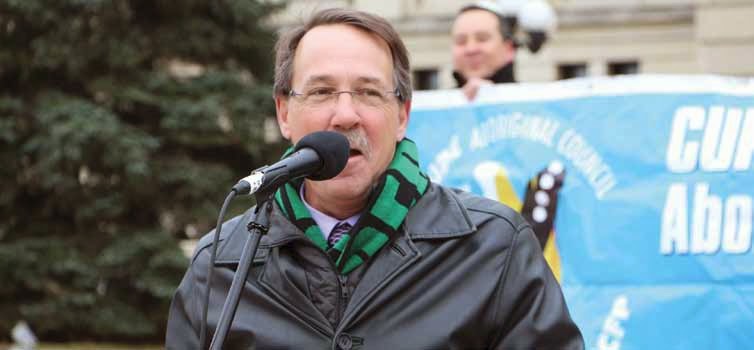 “The decision by the Supreme Court to grant every worker in
Canada a constitutional right to strike is a profound victory for our
movement,” said Hubich, “the Court also delivered a strong message to conservative
governments everywhere: your rigid ideology does not trump workers’ rights,” he
added.
The Public Services Essential Services Act (Bill 5) was
introduced by the newly-elected Saskatchewan Party government in 2007. As soon
as it was introduced, workers, their unions, lawyers, and academics all said
the Bill was overreaching, unnecessary, and probably illegal. The Saskatchewan
Party, though, continued to only listen to their corporate friends instead of
Saskatchewan families. As a result, a long Charter Challenge was launched by
the SFL and its affiliates against Bill 5 to protect working families.
Despite the long and expensive court process, workers and
their unions were gracious in their victory – extending an invitation to the
Saskatchewan Party government to work together.
“We know that a work stoppage is always the last resort, and
unions always prefer a negotiated agreement that is good for both sides,” said
Hubich, “our victory does not change any of that, and we want to work with the
provincial government to develop labour laws that are fair, balanced, and
respect the rights of workers,” he added.
However, just a few days after the SCC ruling, Brad Wall
floated the option of using the notwithstanding clause so that he and his
government could continue violating Charter rights.
“This is a time for reconciliation and leadership, not a
time for the premier to stomp his feet and threaten to deny Saskatchewan
families their Charter rights,” said Hubich, “workers and their unions continue
to offer our cooperation to create good public policy, and we hope the premier
will come to the table in good faith,” he added.
Tuesday, 23 December 2014
Sunday, 2 November 2014
Sunday, 27 April 2014
Bill 5 & 6 Charter Challenge Heads to the Supreme Court of Canada

Though no organization ever wants to be in the position of taking its own government to court, Bills 5 and 6 represent significant infringements upon the fundamental rights of Saskatchewan working people. On behalf of the people of the province, and on behalf of the generations of people that struggled for the rights we enjoy today, it is our responsibility to challenge laws that appear to be unconstitutional, particularly when they concern people’s basic rights at work.
In 2010, the United Nation’s International Labour Organization (ILO) found that Bills 5 and 6 violate Canada’s international law commitments.
In April 2013, the Saskatchewan Court of Appeal released a much-anticipated decision recognizing that Canadian law has evolved to a point where a right to strike may be protected by the Constitution. At numerous points, the Court of Appeal notes that, though it could not overturn previous Supreme Court decisions respecting a right to strike, striking could very well be a fundamental right protected by the freedom of association.
Before the Supreme Court of Canada, the SFL et al will be making the case that Saskatchewan people, and all Canadians, enjoy a right to strike that is constitutionally protected. We are also asking for a declaration that the 2008 changes to the Saskatchewan Trade Union Act substantially interfere with workers’ right to form unions of their own choosing, for the purpose of bargaining collectively with their employers.
In only a matter of weeks, working people in the province and across the nation will finally have an answer to questions raised in the Fall of 2007.
Monday, 9 December 2013
Monday, 21 October 2013
Thursday, 17 October 2013
Supreme Court of Canada Agrees to Hear Charter Challenge of Bills 5 & 6

"It is extremely unfortunate that we find ourselves in this position," said Saskatchewan Federation of Labour President, Larry Hubich. "Obviously, we would rather not be forced into taking our government to court. Unfortunately, however, Bills 5 and 6 represent significant infringements upon the fundamental rights of Saskatchewan working people. On behalf of the people of the province, and on behalf of the generations of people that struggled for the rights we enjoy today, we believe it is our responsibility to challenge laws that appear to be unconstitutional, particularly when they concern people’s basic rights at work."
In 2010, the United Nation’s International Labour Organization (ILO) found that Bills 5 and 6 violate Canada’s international law commitments, as well as working people’s rights. In April of this year, the Saskatchewan Court of Appeal released a much-anticipated decision recognizing that Canadian law has evolved to a point where a right to strike may be protected by the Constitution. At numerous points, the Court of Appeal notes that, though it could not overturn previous Supreme Court decisions respecting a right to strike, striking could very well be a fundamental right protected by the freedom of association.
"We believe it is time for the Supreme Court of Canada to recognize that Saskatchewan people, and all Canadians, enjoy a right to strike that is constitutionally protected. We are also asking for a declaration that the 2008 changes to the Saskatchewan Trade Union Act substantially interfere with workers’ right to form unions of their own choosing, for the purpose of bargaining collectively with their employers."
PDF available here
Monday, 15 July 2013
Thursday, 14 March 2013
Tuesday, 8 January 2013
Idle No More - Priscilla Settee and Sheelah McLean
This video of Priscilla Settee and Sheelah McLean talking about Idle No More is accompanied by a Making the Links - Community Radio indepth interview with them broadcasting tomorrow night at 6 pm (Wed. Jan 9, 2013) on CFCR.ca - CFCR 90.5 FM on the dial or Channel 820 at Sasktel Max. Please tune in.
Tuesday, 18 December 2012
Monday, 10 December 2012
Sunday, 18 November 2012
Thursday, 11 October 2012

Saturday, 7 April 2012
Court Decision Upholds Working People's Rights

He also found that the right to strike is protected by international law, and that governments are bound by international law when assessing the constitutionality of our laws under the Charter. Download Justice Ball's decision here....
As a result of these findings, he ruled that the Sask. Party government’s “essential services” legislation (also known as Bill 5), violates our fundamental freedoms and human rights. He said the law, in its entirety, is unconstitutional.

The Judge said that when a law violates the Charter, if the government has failed in its duty to consult prior to passing the law, the law must be struck down. Just like the United Nations’ International Labour Organization (ILO) warned the Saskatchewan government, they must consult with citizens before introducing legislation that affects Charter rights.
Justice Ball even paid attention to the role of government as employer. He said that governments cannot use their sovereign power to legislate in a manner that eliminates the obligation to respect their employees’ collective bargaining rights.
What happens now?
The Judge ruled that the invalidity of the old law is suspended for 12 months, to give the government time to fix it if possible.
The government is appealing the Judge’s ruling that freedom of association includes the right to strike, in the hopes that, if they win, Bill 5 will stay in force. At the Saskatchewan Court of Appeal, the unions will defend the right to strike finding, and will cross-appeal on the unconstitutionality of Bill 6 (the 2008 changes to The Trade Union Act).
What about Bill 6?
The Judge did not agree with our argument that the changes to The Trade Union Act violated workers’ fundamental freedoms under the Charter. He did not, however, dispute our facts about the number of union certifications decreasing since the passing of the laws. Regarding employer communication, he says “even a reasonably courageous employee can be cowed by employer statements that directly or implicitly threaten negative consequences if the wishes of the employer are opposed.”
What kind of input will labour have into any new essential services law?
Minister Don Morgan asked us for written feedback, with a deadline of two weeks. Working people’s organizations (which already submitted feedback on Bill 5 and 6 to the government when it was introduced, and also to the court in its written and oral arguments) have asked for face-to-face meetings to discuss what kind of consultation would comply with Judge Ball’s decision.
What are the remedies?
The Judge has agreed to hear submissions on remedies for the violation of working people’s rights.
Five little-known facts about the Bills 5 and 6 Charter challenge
1. Non-affiliated unions who joined in solidarity with the SFL et al: 3 (Health Sciences Association of Saskatchewan, University of Regina Faculty Association, and Teamsters local 395.)
2. Number of lawyers who participated in the trial (from both sides): 19
3. Total days of argument: 12
4. Number of pages filed with the Court: approximately 15,000
5. Employers who intervened in the case (SAHO, the Saskatoon Regional Health Authority, SaskPower, SaskEnergy, the University of Regina, the University of Saskatchewan, City of Regina, City of Saskatoon, SUMA and SARM) argued that management should have the final say in who can strike and who cannot.
Quotable Quotes
“I am satisfied that the right to strike is a fundamental freedom protected by s.2(d) of the Charter along with the interdependent rights to organize and to bargain collectively. That conclusion is grounded in Canada’s labour history, recent Supreme Court of Canada jurisprudence and labour relations realities. It is also supported by international instruments which Canada has undertaken to uphold.”
— Justice Dennis Ball, Saskatchewan Court of Queen’s Bench, February 2012
“The ultimate truth of free collective bargaining is that it can only operate effectively, in market terms, if it is backed up by the threat of economic sanction.”
— Justice Ball, quoting Rayner
“...the evidence clearly established that substantive consultations with respect to the PSES Act took place only between the Government and employer groups. It also establishes that although the largest public sector Unions made every effort to meet with the Government representatives in order to have meaningful input into the legislation, their efforts were unsuccessful. Any consultation with the Unions about the PSES Act was superficial at best.”
“It is enough to say that no other essential services legislation in Canada comes close to prohibiting the right to strike as broadly, and as significantly, as the PSES Act. No other essential services legislation is as devoid of access to independent, effective dispute resolution processes...”
Download a PDF Version of the SFL Newsletter here....
Monday, 2 January 2012
SFL awaits Court decision in Charter Challenge case against Bills 5 & 6

During November of 2011 the SFL et al, along with 3 intervenor unions were in court to argue that the Saskatchewan provincial government’s (2007 - 2008) labour legislation (Bills 5 & 6) violates the Charter rights of working people.
The SFL team argued 3 main points:
1. People have the right to form unions of their own choosing for the purpose of bargaining collectively with their employers:
- Free from employer and government interference;
- Consistent with international human rights as defined by the United Nations;
- Consistent with the freedom of association provisions of the Charter; and
- Consistent with the freedom of expression provisions of the Charter.
2. The provincial government should ensure a level playing field for working people with major corporations by defending working people’s ability to have a voice in the workplace.
3. The government should re-balance its legislation and enable unions to defend the rights of working people from attacks that have tipped the scales in favour of rich corporations and CEOs.
The Charter of Rights and Freedoms guarantees freedom of conscience and religion; freedom of thought, belief, opinion and expression, including freedom of the press and other media of communication; freedom of peaceful assembly; and freedom of association.
It is extremely important that we continue to take our case against the provincial government forward and to defend the charter rights of working people in our province.
Wednesday, 23 November 2011
Together, we can do it
 In October,
The theme of this year’s convention was “We Can Do It,” the iconic motto of Rosie the Riveter. Rosie’s famous words were a fitting theme for working people as we headed into a provincial election.
We have now seen the re-election of a government responsible for legislation that has significantly limited the rights of working people. It will be increasingly important to keep in mind that “we can do it.”
With a government in power that has passed legislation to strip working people of their Charter rights, political commentators that make no effort to hide an agenda against working people, and provincial and federal governments that care more about corporate tax cuts than protecting the pensions of people across the nation, it is more important than ever that we maintain our commitment to defending the rights of working people.
It is because of the diligent efforts of generations of working people that we enjoy the quality of life that we do in
It is because of dedicated and compassionate people like you that we have pensions and comparatively good labour standards. It is because of people like you that we have Medicare and public services and Crown corporations that are still the envy of the continent, in spite of the current government’s recent attempts to undermine them. It is because of people like you that we had workplace safety standards enshrined in legislation in the first place and that we still have a Trade Union Act, even though our government has attempted to water it down and undercut our rights.
The truth is that people across this province should be extremely thankful for the hard work and dedication that working people show every day.
No amount of opposition from any government, political commentator, or interest group is going to stop us from conducting our most important work: defending the rights of working people.
In solidarity,
Larry Hubich, SFL President
Download full issue of SFL Labour Reporter here in pdf.
Subscribe to:
Posts (Atom)